
Comparison
Tractive vs Fi: Which dog tracker fits your life?
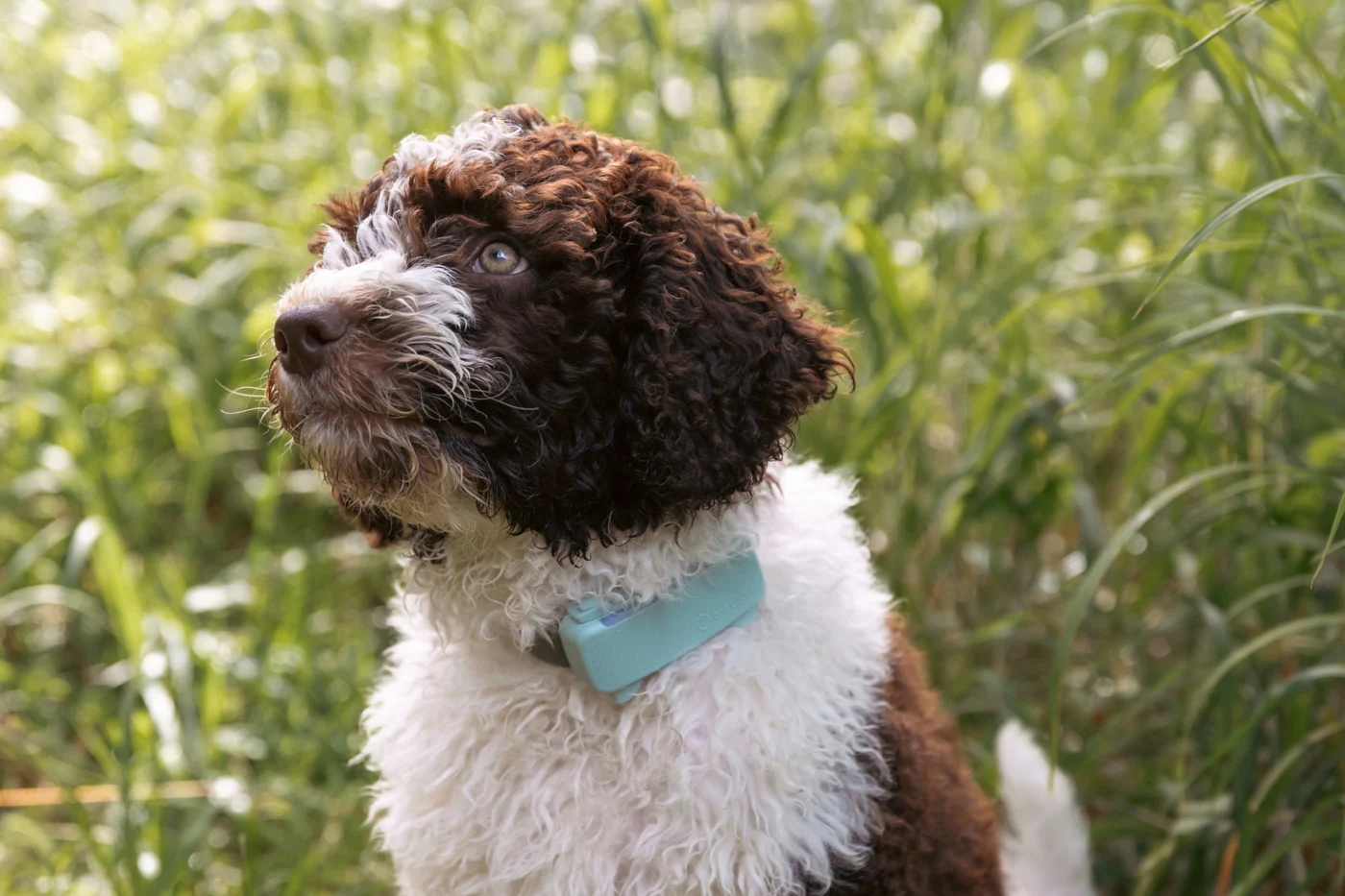
The best dog GPS tracker is the one that fits your dog, has a charge, and can send a location where you walk. A long feature list cannot fix a poor fit or a dead signal.
In this Tractive vs Fi comparison, we mean the Tractive DOG 6 and Fi Series 3+. Both offer GPS tracking, escape alerts, and activity data. They take different routes to the same goal: helping you keep track of your dog.
Tractive is our first pick for value and a flexible fit. Fi has a stronger case if you want a smart collar with long battery life and fewer trips to the charger.
Tractive vs Fi: the main differences
| Your priority | The better starting point |
|---|---|
| Keep an existing collar | Tractive DOG 6 clips onto a suitable collar. |
| Long battery life | Fi Series 3+ claims up to three months. Real use varies. |
| Lower two-year cost | Tractive, based on the listed US hardware and prepaid plans below. |
| A collar and tracker in one | Fi Series 3+ has an integrated design. |
| Remote trips without cell service | Neither is a safe bet for live location updates without supported coverage. |
Collar fit comes before app features
The Tractive DOG 6 is a clip-on tracker. That lets you keep a collar your dog already wears well. It is handy if you like a certain buckle, material, or style.
DOG 6 weighs about 1.4 ounces and measures 2.8 by 1.1 by 0.7 inches. Tractive lists it for dogs above 8.8 pounds and collars up to 1.1 inches wide. Check the width of the part where the mount will sit, not just the size printed on the collar.
The Fi Series 3+ puts the tracker into the collar. It looks more like one piece of gear than an extra item clipped on. Fi offers several collar sizes, so measure your dog's neck against the current size chart.
For small dogs, the shape of a device can matter as much as its weight. Cut a piece of card to the stated tracker size. Hold it near the collar to judge the space it would take, without attaching anything stiff or sharp to your dog.
Watch how the collar sits when your dog lies down or bends to drink. A good fit while standing still is only part of the check. If the device rubs, swings, or crowds the buckle, choose a different setup.
Fit is just as personal for cats. If your home has both, our cat harness guide covers why a snug chest and neck fit needs more than a weight label.
What do they cost over two years?
Do not compare the hardware price alone. Both GPS trackers need a paid plan for their connected features. The plan can cost more than the tracker itself.
| US cost | Listed amount |
|---|---|
| Tractive DOG 6 hardware | $79 |
| Tractive Basic, two years | $144, paid up front |
| Tractive Premium, two years | $168, paid up front |
| Fi Series 3+ hardware | $129 |
| Fi membership, two years | $339, paid up front |
| Two-year total | Tractive Basic: $223. Tractive Premium: $247. Fi: $468. |
These totals use listed US prices checked on September 28, 2026. They exclude tax, optional protection, and sale offers. Your cart may differ.
The Tractive plan page lists Basic from $108 for one year and Premium from $120. Premium lets family members share access. It stores more past routes and works abroad where there is a supported network.
Tractive Care is an added charge, not the same thing as the tracking plan. Check whether it is selected before you pay. A quoted monthly rate may be a yearly or multi-year total split into months; it does not mean you can pay that amount each month.
Fi's US plan prices are $99 for six months. One year costs $189, and two years cost $339. You pay for the tracker and plan on their own. Current users may keep older rates.
Fi starts new users on a one-year plan. You have a short time to change that term. Read that step carefully. A low hardware offer is not the full cost of getting started.
On these prices, Tractive Premium costs $221 less over two years. That is a large enough gap to matter. Fi needs to earn the extra spend through a better fit or a charging routine that works better for you.
Battery life: Fi has the stronger claim
Fi claims up to three months for Series 3+. Tractive lists up to two weeks for DOG 6 with Power Saving Zones. Without those zones, its comparison page lists up to six days.
These are maker claims, not a promise for your dog. Live tracking, weak signal, and time away from a power-saving connection can use more energy. The longest battery figure is not the same as time spent actively tracking a lost dog.
A dog that spends most of the day at home may get a very different result from one that is out on trails each day. When reading owner reports, look for a routine like yours.
Long battery life has real value if you forget to charge small devices. Still, a monthly habit is easier to miss than a weekly one for some people. Choose a charging plan you will keep, then check the app before leaving home.
Tractive DOG 6 uses USB-C charging. Fi uses a charging base. Think about where that charger will live and how you will pack it for a trip. A spare cable may be easier to find than a model-specific base.
When the tracker is off your dog to charge, it cannot track the dog. Plan that gap for a time when your pet is safely indoors and supervised.
GPS accuracy depends on where you are
GPS finds a location. A cell network sends that point to your phone. The tracker may know where it is but lack the signal to tell you.
Tractive works with several network partners. That is a useful reason to consider it, but a list of carriers cannot prove that it works in a hollow, deep woods, or the far side of your yard.
Before keeping either GPS dog tracker, try it on the routes you use. Keep the dog on a leash. Have another person watch the app while you walk a known path. Check whether the map and time stamp match what is happening.
Test the edge of your safe zones as well. An alert that arrives after a delay may still help, but you need to know what that delay feels like before a real escape.
Your phone may have a signal where the tracker does not. They may use different networks. Ask the maker about service for that model where you live.
Live tracking and escape alerts
Tractive offers LIVE tracking. Fi has Lost Mode for a missing dog. Learn how to turn these on while you are calm, rather than trying to find the right screen after a gate is left open.
Escape alerts also need a little thought. Marking a home area in an app does not create a physical fence. GPS drift can place a still dog outside a boundary, and a real departure may not trigger an instant message.
Start with a sensible boundary, then test it. Check that your phone lets the app send alerts. If several people care for the dog, decide who will respond to an alert and who has access to the location.
When the dog leaves a safe area, look at the time of the last update as well as the map pin. An old point is a last known location, not proof that your dog is still there.
Neither device should change how you manage a known escape risk. Keep using a sound fence, a leash where needed, and readable ID tags. A GPS collar adds a way to search; it does not stop the escape.
What real users add to the picture
In this Fi and Tractive owner thread, one Series 3+ user said it helped find a dog. That user also found limits in the map view. A DOG 6 user liked the app and walk data, but felt the device was too bulky.
Those reports pull in different directions for a good reason. A tracker that works well on one dog can fit poorly on another. A device that gives a useful signal in town may struggle on a remote trip.
Also check model names when reading reviews. Fi Series 3 is not Series 3+, and older Tractive models use different hardware. Do not treat a complaint about an old charger as proof about the DOG 6.
We would use owner reports to choose what to test during the return window. We would not use a few posts to assign a failure rate or promise that one brand is always more accurate.
Activity and health tracking are useful extras
Both brands track how your dog moves and rests. Their charts may help you spot a change. Your dog might move less or sleep at new times.
A step count is most useful as a trend for the same dog. It is less useful as a contest between dogs of different sizes, ages, or needs. Do not push a tired dog to reach a number in an app.
Health monitoring is also not a diagnosis. If something seems wrong, seek advice from your vet. A reassuring chart should not outweigh a clear change you can see.
Before you add more smart pet gear, ask what the data will change. Will it help with daily care? Our Litter-Robot 4 vs 5 comparison applies that test to litter-box tracking.
Which dog owners should choose Tractive?
Choose Tractive DOG 6 if your current collar fits well and you want to keep it. It also costs less at these prices. Premium may suit you if you share care or take trips abroad.
Be ready to charge more often than Fi's headline battery claim suggests. Check the mount each time you put the collar on. A loose clip is a problem no app can solve.
Before a trip, check that the device and plan work where you will go. A global service still has gaps.
When is Fi the better choice?
Choose Fi Series 3+ if you want the tracker built into the collar. Its long battery life is a good reason to pay more. It may also suit a dog that dislikes a clip-on unit.
The higher cost may be worth it if Fi fits well and stays charged. Extra app features alone are less of a draw. Think about which ones you would use.
During the trial, test the Fi app and escape alerts in the places that matter to you. Do not keep it solely because the collar looks neat.
Our verdict on Fi vs Tractive
We would start with Tractive DOG 6 if it fits your dog. It costs less and clips to a collar you may already own. Choose Fi Series 3+ when its shape or long battery life solves a daily problem.
Use the return window to check fit, charging, and live tracking close to home. Get to know where the tracker works well. Learn where it struggles too. That is worth more than a promise on the box.